
When Building Commissioning
Should Start on a U.S. Construction Project
In U.S. construction projects, commissioning plays a critical role in bridging the gap between design intent and actual building performance.
Building commissioning (Cx) is a structured professional process that supports the planning, design, construction, installation, testing, documentation, and operation of building systems to ensure they perform in line with the Owner’s Project Requirements (OPR). In U.S. construction projects, commissioning plays a critical role in bridging the gap between design intent and actual building performance.
At its core, building commissioning in the U.S. is about verification. It confirms that systems are installed correctly, function as intended, and operate efficiently as an integrated whole. This applies to both new developments and existing buildings, where performance issues often emerge after occupancy due to incomplete testing or poor system coordination.
The commissioning process typically follows defined phases across the project lifecycle. For new construction, this includes early planning, design reviews, installation verification, system testing, and performance validation prior to handover.
For existing buildings, retro-commissioning and re-commissioning focus on identifying performance gaps, correcting deficiencies, and improving operational efficiency throughout the asset’s life.
Unlike many project disciplines, commissioning providers (CxPs) are involved from early design through construction, handover, and post-occupancy performance review. In U.S. projects, this continuous involvement allows commissioning teams to identify issues that may be overlooked by individual disciplines working in isolation.
Effective construction commissioning requires deep technical knowledge, practical site experience, and the ability to assess building and system performance from multiple perspectives.
As buildings become more complex and performance expectations increase, building commissioning services have become essential for ensuring compliance, operational readiness, and long-term efficiency.
Whether applied to commercial, institutional, or large-scale residential developments, commissioning provides owners and project teams with clarity, accountability, and confidence that buildings are delivered ready to perform as intended.

Commissioning Benefits and Goals
The primary benefit of building commissioning in the U.S. is the confidence it provides. Commissioning provides documented evidence that a facility and its systems perform as intended as the building transitions from construction into long-term operations and maintenance. Rather than relying on assumptions or isolated test results, commissioning offers a structured, verifiable view of system performance at handover.
For new construction projects, construction commissioning ensures that systems are planned, installed, tested, and verified in line with the Owner’s Project Requirements (OPR).
For existing facilities, commissioning can be used as a diagnostic and corrective process, even when no formal commissioning was originally carried out. In these cases, existing building commissioning helps identify performance gaps, resolve operational issues, and improve efficiency throughout the asset’s life.
Across U.S. commercial and institutional projects, building commissioning services support the delivery of safe, reliable, and ready-to-use facilities.
Commissioning helps improve energy and water efficiency, reduce operational risk, and lower long-term operating costs. It also supports smoother handover by improving system documentation and enabling facilities management teams to better understand how building systems are intended to operate.
From an operational perspective, effective commissioning processes can reduce reactive maintenance, minimise unplanned downtime, and improve occupant comfort. These outcomes directly improve productivity and, in many cases, strengthen financial performance across facilities and operational teams.
Owners benefit most clearly from improved facility performance and reduced exposure to business disruption. The cost of not commissioning is often far greater than the investment required to commission properly.
Issues that are not identified during design and construction frequently surface later, when correcting them is significantly more expensive. In mission-critical facilities, such as healthcare, data centres, and specialised commercial environments, the impact of poor commissioning can be measured in lost revenue, operational downtime, and restricted facility use.
The core goal of U.S. building commissioning is to define success clearly through the Owner’s Project Requirements and to verify that the building and its systems meet those expectations.
Commissioning can be applied to an entire facility or to individual systems and assemblies, whether they are new, upgraded, or modified. This flexibility makes commissioning relevant across a wide range of project types and scopes.
Beyond performance and operational outcomes, commissioning is increasingly driven by sustainability and certification requirements. Many owners pursue building performance rating systems to demonstrate energy efficiency, environmental responsibility, and long-term value. These systems place strong emphasis on verification, documentation, and operational readiness.
As U.S. buildings incorporate more advanced technologies, including high-efficiency HVAC systems, lighting controls, renewable energy systems, and water conservation measures, the need for performance verification becomes more critical. Commissioning provides the structured quality assurance needed to ensure these systems function as intended and deliver the expected return on investment.
For owners, commissioning offers assurance that investment in sophisticated building systems is supported by rigorous design review, construction quality checks, and operational verification. When applied holistically, building commissioning becomes a central tool for reducing risk, improving performance, and ensuring long-term value from U.S. construction projects.
Core Goals of Building Commissioning on U.S. Projects
The principal goals of building commissioning in the U.S. include:
- Defining project success early by incorporating performance expectations and the commissioning process directly into the Owner’s Project Requirements (OPR) document.
- Verifying alignment between intent and delivery, ensuring OPR requirements are accurately reflected in design documentation and construction activities on new projects.
- Facilitating the delivery of compliant, high-performing buildings that meet the Owner’s Project Requirements across all systems and disciplines.
- Preventing and resolving issues proactively through structured quality assurance techniques that identify problems early and reduce the need for costly corrective work.
- Confirming system installation and performance, verifying that building systems are installed correctly, operate as intended, and meet agreed performance benchmarks.
- Providing complete and usable documentation, including design records, construction data, and testing results to support long-term operations and maintenance activities.
- Supporting O&M staff readiness through system training, operational documentation, and commissioning tools that enable effective day-to-day operation and ongoing commissioning.
- Reducing overall project and life-cycle costs by minimising rework, improving system efficiency, and lowering long-term operational expenses for owners.
- Maintaining building performance over time, ensuring that facilities continue to operate efficiently and reliably throughout their entire life cycle.
Commissioning Definitions
Building commissioning definitions can vary by project phase, building type, and the commissioning process applied to a specific U.S. construction project. Commissioning may be implemented across an entire facility or targeted to individual systems or assemblies, based on the Owner’s Project Requirements (OPR) and project objectives.
In the United States, commissioning is best understood as a holistic, lifecycle-based process that begins during early planning and extends through construction, occupancy, and ongoing operations. The definitions below reflect commonly accepted commissioning approaches used across U.S. commercial and institutional buildings, aligned with recognised industry standards.
Key Commissioning Types and Definitions
Commissioning Process (Cx)
A quality-focused process applied to new construction and major projects, including New Construction Commissioning (NCCx). The process verifies and documents that commissioned systems and assemblies are planned, designed, installed, tested, operated, and maintained in accordance with the Owner’s Project Requirements.
Existing Building Commissioning (EBCx)
A structured process used to evaluate and improve the performance of an existing facility. Existing Building Cx focuses on meeting the Current Facility Requirements (CFR) by planning, investigating, implementing improvements, verifying outcomes, and documenting system performance, with the goal of sustaining these improvements throughout the building’s remaining life.
Retro-Commissioning (RCx)
A form of building commissioning applied to an existing facility that has never undergone formal commissioning. RCx is commonly used on older U.S. buildings to identify performance issues, improve efficiency, and enhance system reliability.
Recommissioning (ReCx)
The process of commissioning a building that has previously been commissioned. Recommissioning is typically triggered by changes in building use, ownership, occupancy patterns, or the emergence of ongoing operational issues.
Monitoring-Based Commissioning (MBCx)
A data-driven commissioning approach that relies primarily on monitored data rather than manual testing. MBCx uses information from Building Automation Systems (BAS), meters, and analytics platforms, often referred to as Energy Management and Information Systems (EMIS), to evaluate and improve building performance over time.
System-Specific Commissioning
A targeted commissioning approach focused on specific building systems rather than the entire facility. Common applications include indoor environmental quality, HVAC performance, or chiller plant efficiency on U.S. commercial projects.
Ongoing Commissioning (OCx)
A continuous process that regularly collects and analyses building performance data to ensure systems operate as intended. Ongoing commissioning supports long-term performance optimisation and is typically delivered under a separate agreement following NCCx or EBCx.

Commissioning Phases for New Construction Projects
Phase 1: Predesign
Early involvement is critical to the success of U.S. building commissioning. Beginning the commissioning process during the predesign phase allows the CxP to support the timely development of foundational project documents.
Key activities during this phase include:
- Establishing and documenting the Owner’s Project Requirements (OPR)
- Supporting the design team’s Basis of Design (BOD) development
- Preparing the initial Commissioning Plan
- Initiating the Operations and Maintenance (O&M) Systems Manual
When developed early, these elements serve as effective tools for communication, risk management, cost control, and quality tracking. Delaying commissioning until later stages and attempting to align it retrospectively reduces its value and limits its impact on project outcomes.
Phase 2: Design
During the design phase, project concepts are translated into detailed construction documentation. Building commissioning in the U.S. ensures that these documents remain aligned with the OPR as designs evolve.
Key commissioning activities during the design phase include:
- Reviewing design development and construction documents for alignment with the OPR
- Supporting updates to the OPR where owner-approved changes arise
- Defining which systems will be commissioned
- Developing commissioning specifications that clarify contractor and manufacturer responsibilities
- Expanding the Commissioning Plan to include preliminary testing procedures, field observation requirements, and documentation formats
At key design milestones, the CxP reviews construction documents to confirm that commissioning requirements are included and that the overall alignment with the OPR is maintained. These reviews are intended to verify compliance with project requirements and are not peer design reviews. Any outstanding issues are documented and addressed by the design team prior to design completion.
Phase 3: Construction
During construction, the commissioning process moves from planning into active implementation. Commissioning remains engaged throughout this phase to support coordination, verification, and performance testing.
Key activities during the construction phase include:
- Integrating commissioning schedules into the overall construction programme
- Reviewing submittals for commissioned systems
- Finalising field observation procedures, checklists, and functional performance testing requirements
- Assembling the commissioning team, including contractors, subcontractors, manufacturers, and suppliers
- Conducting commissioning scoping and coordination meetings
The CxP maintains an issues and resolution log to track concerns, questions, and corrective actions throughout the project. This log supports transparency and coordination between the owner and commissioning team and forms part of the final commissioning documentation.
Installation checklists and preliminary observations are typically completed by contractors in accordance with the commissioning plan and reviewed by the CxP. Functional Performance Tests (FPTs) are conducted in coordination with construction schedules, with the CxP witnessing the testing activities.
Based on test results, a preliminary commissioning report is prepared for the owner’s review. Where required, this may also support discussions with local authorities having jurisdiction. Any identified deficiencies, corrective actions, or off-season testing requirements are documented to ensure full resolution prior to project closeout.
Phase 4: Hand-Off and Occupancy
The hand-off and occupancy phase marks the transition from construction to full operational control by the owner. At or near substantial completion, operational responsibility for the facility is formally transferred after system training and knowledge transfer are completed.
During this phase, building commissioning in the U.S. focuses on ensuring that facilities management teams are prepared to operate and maintain building systems effectively. Training is typically delivered by the design team, where applicable, along with contractors, manufacturers, and suppliers, and is supported by commissioning documentation developed throughout the project.
The commissioning process does not conclude at initial occupancy. Final completion depends on successful completion of any required off-season testing, which verifies system performance under conditions not present athandover. This step is particularly important for systems affected by seasonal variation, such as HVAC and energy management systems.
Completion of the systems manual is another critical requirement during this phase. All commissioning records, testing results, and operational documentation are finalised and formally transferred to the owner to support long-term operations and maintenance.
Once outstanding testing and documentation activities are complete, the final commissioning report is prepared. This report includes a comprehensive summary of commissioning activities, verified performance outcomes, and a final issues log. Any remaining open items are clearly documented and accepted by the owner, providing full transparency and closure.
At this stage, U.S. building commissioning delivers its final objective: a facility that is operationally ready, properly documented, and positioned for efficient long-term performance.
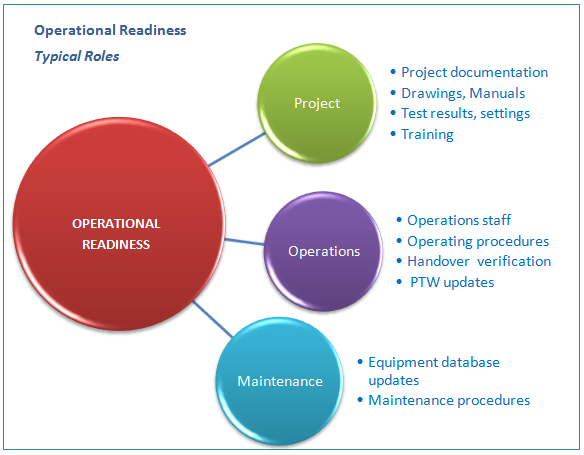
New Construction and System Commissioning Documentation
New construction commissioning in the U.S. follows a defined sequence of activities designed to ensure building systems are delivered, tested, documented, and handed over in line with the Owner’s Project Requirements (OPR). Each activity plays a specific role in delivering a complete and effective commissioning process.
Key Commissioning Activities and Documentation
Commissioning Initiation
The commissioning process is formally initiated by the owner or owner’s representative at the outset of the project. During this stage, commissioning roles and responsibilities are defined, project procedures are established, and contractual arrangements are confirmed to support commissioning activities across all phases.
Owner’s Project Requirements (OPR)
The OPR document defines the project’s functional, operational, and performance expectations. It captures requirements related to building use, scope, efficiency, sustainability, resilience, training, testing, commissioning, and documentation. The OPR acts as the primary reference document throughout design and construction and is updated as the project evolves.
Commissioning Plan
The Commissioning Plan, prepared by the Commissioning Provider (CxP), outlines the commissioning scope, communication protocols, schedules, and responsibilities. It defines how commissioning will be integrated into design and construction and is updated over time to include checklists, testing procedures, and documentation formats. The plan is reviewed and accepted by the owner.
Basis of Design (BOD)
The design team prepares the Basis of Design to document how the proposed design meets the requirements outlined in the OPR. The CxP reviews the BOD for alignment with the OPR before design completion to ensure consistency between owner intent and design execution.
Commissioning Specifications
During design development, commissioning requirements for contractors and manufacturers are clearly defined and incorporated into the construction specifications. These requirements outline responsibilities related to installation verification, testing, documentation, and participation in commissioning activities.
Design Review
The CxP design review verifies that construction documents reflect the OPR and include appropriate commissioning requirements. This review supports the refinement of commissioning plans and helps identify potential issues before construction begins. It is a compliance review, not a peer design review.
Submittal Review
Equipment and material submittals are reviewed by the commissioning team to confirm compliance with the OPR and construction documents. Submittals also provide technical details used to develop commissioning checklists and testing procedures.
System Verification
During construction, the commissioning team verifies system installation through site observations and witnesses equipment start-up and initial testing. Installation checklists and verification reports are completed in accordance with the commissioning plan.
Functional Performance Testing (FPT)
Functional Performance Testing confirms that systems operate as intended under normal and abnormal conditions. Testing is conducted in line with the commissioning plan to verify compliance with both the OPR and design documentation.
Issues and Resolution Log
An issues and resolution log is maintained throughout the project to document problems, questions, corrective actions, and resolutions. This log serves as a central communication tool for the owner and commissioning team and supports transparent issue tracking.
Systems Manual
Throughout design and construction, commissioning documentation, testing results, and verification records are assembled into the systems manual. This manual provides a comprehensive record of system design, installation, and operation and supports long-term operations and maintenance activities.
Training
Training for operations and maintenance staff occurs throughout the commissioning process and is formalised during hand-off. Training ensures staff understand both how systems operate and why they function as designed, supporting effective long-term use and maintenance.
Seasonal or Deferred Testing
When systems cannot be fully tested prior to occupancy due to seasonal or operational constraints, deferred testing is conducted post-occupancy. Results are documented and included in the final commissioning records.
Commissioning Report
A preliminary commissioning report is typically issued at the time of Certificate of Occupancy, summarising completed activities and system performance to date. Upon project completion, a final commissioning report is prepared, providing full documentation of commissioning outcomes in accordance with the OPR and local U.S. jurisdiction requirements.
Commissioning Process Management
Effective building commissioning in the U.S. relies on clear process management, defined ownership, and early engagement. The owner, or the owner’s appointed representative, plays a central role in defining commissioning expectations, approving documentation, and ensuring the process delivers measurable value.
From the earliest planning stages, the owner establishes the scope, objectives, and requirements of the commissioning process, as well as the roles and responsibilities of the commissioning team. These responsibilities are documented and refined as the project progresses to maintain alignment across all stakeholders.

Role of the Commissioning Provider (CxP)
- The Commissioning Provider (CxP) typically reports directly to the owner or owner’s representative on U.S. projects.
- This reporting relationship is established contractually at project inception to maintain independence.
- Direct reporting reduces the risk of conflicts of interest and reinforces the role of commissioning as an assurance function.
- The primary purpose of commissioning is to verify that the owner receives full value in terms of system functionality, performance, and operational readiness.
Building and System Commissioning Initiation
Early engagement of the CxP is critical to successful construction commissioning. When involved from project inception, the CxP can contribute meaningfully to early planning and performance definition.
Key benefits of early commissioning initiation include:
- Familiarisation with project programming and performance objectives
- Leading or supporting the Owner’s Project Requirements (OPR) workshop
- Defining whole-building performance criteria aligned with project goals
- Supporting alignment with U.S. certification frameworks, such as LEED, Green Globes, WELL, and Living Building Challenge, where applicable
- Addressing jurisdictional and regulatory requirements early
Developing the OPR during the predesign phase also provides owners with a valuable evaluation tool. During design team selection, responses to the OPR and the submitted Basis of Design (BOD) documents provide insight into how well potential teams understand theproject intent and performance expectations.
Early Integration of Operations and Maintenance Planning
- Initiating Systems Manual requirements early allows operations and maintenance considerations to influence design decisions.
- Early inclusion of O&M requirements supports long-term energy efficiency, equipment longevity, and operational reliability.
- This approach improves the persistence of performance strategies embedded into the building design.
Determining Project Performance Requirements
Every U.S. construction project evolves through planning and design phases, during which the owner’s needs, operational goals, and performance expectations are progressively defined.
A well-developed OPR document serves as the foundation of effective building commissioning by:
- Defining functional, operational, and performance objectives
- Establishing energy, water, and operational benchmarks
- Setting cost expectations and high-level programme milestones
- Identifying operational strategies and staffing considerations
- Providing objective criteria for evaluating design and construction outcomes
The commissioning process supports the owner by helping identify and refine performance requirements related to energy efficiency, indoor environmental quality, system reliability, staff training, and long-term maintenance.
An effective OPR is developed collaboratively with input from owners, facilities teams, and end users and is updated throughout the project lifecycle. When properly maintained, the OPR becomes the definitive measure of project success.
Defining Commissioning Requirements for a Project
U.S. building commissioning can be applied to an entire facility or limited to specific systems or assemblies, depending on owner priorities. The scope and application of commissioning are defined within the OPR and translated into actionable requirements through the Commissioning Plan (Cx Plan).
Key Commissioning Requirements Commonly Defined
- Establishing goals for project quality, efficiency, functionality, and certification outcomes
- Defining the commissioning scope and boundaries
- Setting commissioning budgets and resource allocations
- Assigning commissioning roles and responsibilities
- Developing commissioning plans and schedules
- Establishing field observation and testing strategies
- Defining commissioning specifications for contractors and suppliers
- Determining documentation and reporting requirements
- Identifying special testing needs
- Defining Systems Manual content and format
- Establishing training requirements for operations and maintenance staff
- Defining requirements for ongoing commissioning (OCx)
The systems and assemblies selected for commissioning determine the level of effort and specific activities required. Owners may also specify variations, such as sampling approaches or targeted testing, to address project-specific risks or priorities.
Project Documentation, Records, and Acceptance
Effective commissioning documentation is critical to U.S. building commissioning, providing a complete, traceable record of how a project was planned, delivered, and verified. Rather than serving as mere paperwork, commissioning records provide long-term value by capturing the rationale for key decisions and the performance standards applied throughout the project lifecycle.
The purpose of building commissioning documentation is to establish a clear historical record of the what, why, and how of system and facility delivery. This includes documenting performance expectations, verifying that installed systems meet those expectations, and demonstrating compliance with the Owner’s Project Requirements (OPR).
Role of Commissioning Documentation
Commissioning documentation supports document compliance and acceptance by:
- Recording agreed performance standards for building systems and assemblies
- Verifying that design and construction activities meet those standards
- Providing objective evidence of system testing, verification, and performance outcomes
- Supporting formal project acceptance and handover processes
- Creating a reliable reference for future operations, maintenance, and recommissioning
These records help ensure transparency and accountability across all stages of the commissioning process and reduce the risk of disputes or uncertainty at project closeout.
Key Commissioning Deliverables
For new construction and system commissioning in the U.S., commissioning documentation typically includes deliverables developed throughout design, construction, testing, and handover phases. These deliverables collectively support compliance verification and final acceptance.
Key commissioning records commonly include:
- The Owner’s Project Requirements (OPR) and approved updates
- The Commissioning Plan and associated schedules
- Design review comments and responses
- Submittal review records
- Installation verification and inspection checklists
- Functional Performance Testing (FPT) procedures and results
- Issues and resolution logs documenting corrective actions
- Training records and attendance documentation
- Systems Manual, including commissioning reports and supporting data
- Preliminary and final commissioning reports
These documents provide a complete picture of how building systems were intended to perform and how their performance was verified before and after occupancy.
Documentation and Acceptance
Formal acceptance of commissioned systems relies on the completeness, accuracy, and clarity of commissioning documentation. In U.S. projects, acceptance typically occurs once required testing is complete, documentation is finalised, and any outstanding issues are resolved or formally accepted by the owner.
Well-managed building commissioning records support smoother acceptance by:
- Demonstrating compliance with the OPR and regulatory requirements
- Providing confidence that systems are operationally ready
- Enabling informed decision-making during handover
- Supporting long-term facility performance and lifecycle management
When developed and maintained correctly, commissioning documentation becomes a valuable operational asset rather than a static archive, supporting future modifications, troubleshooting, and ongoing commissioning efforts.
Building Commissioning in the U.S.
Effective building commissioning in the U.S. is not a single task or final-stage requirement. It is a structured, end-to-end process that supports performance, compliance, and operational readiness across the entire building lifecycle. When commissioning is planned early, managed correctly, and documented thoroughly, it reduces risk, improves system reliability, and delivers long-term value for owners and occupants.
As buildings become more complex and performance expectations continue to rise, commissioning provides the clarity and assurance needed to bridge the gap between design intent and real-world operation. From defining the Owner’s Project Requirements through to performance verification, documentation, and handover, commissioning ensures that buildings are delivered ready to perform as intended.
At Dewick, we support U.S. construction projects with a disciplined and coordinated approach to building commissioning, helping owners and project teams achieve reliable performance, smoother handovers, and stronger long-term outcomes.
If you are planning a new project or reviewing an existing facility, schedule a call with Dewick to discuss how our commissioning services can support your project goals in the United States.
Get to know more about Dewick
Dewick supports contractors, consultants, and owners by removing the burden of O&M manuals, construction closeout, and handover documentation. Our team of experienced client coordinators, engineers, and technical writers works alongside your project team to deliver accurate, compliant documentation without disrupting construction programs.