
US Roof Safety Compliance & Equipment:
What You Need to Know to Keep Your Workers Safe
As an employer, you should always prioritise keeping your workers safe.
“Your employees’ safety and health are the keys to the success of your business” – H. W. Heinrich.
As an employer, you should always prioritise keeping your workers safe. Their safety becomes even more critical when they are working at height. Roof work exposes teams to multiple risks, including falls, unstable surfaces, unprotected edges, and changing weather conditions.
These hazards are common across commercial and industrial sites in the US, which makes strong roof safety planning essential.
This is why it is essential to have the correct roof safety equipment in place and supported by accurate safety documentation.
The right combination of fall protection, roof access systems, and compliance-ready safety procedures helps prevent injuries and protects your workforce from serious incidents. It also ensures your project meets US safety regulations, including OSHA roof safety requirements and site-specific standards.
In this article, we will look at some of the most critical roof safety equipment used across US job sites. We will also cover key topics such as worker training, roof access planning, hazard identification, and the role of clear documentation.
Each component supports a safer working environment and gives your team the confidence to complete tasks at height with reduced risk.
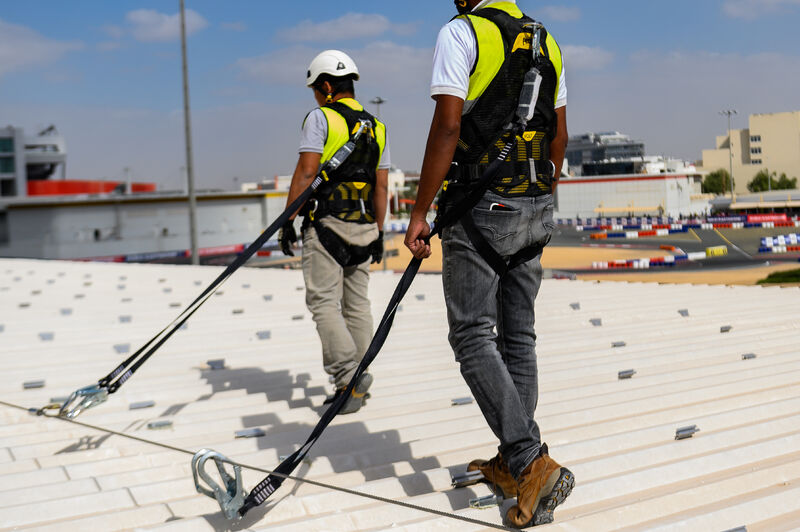
Safety Background
After the Occupational Safety and Health Act was passed in 1970, Congress established the Occupational Safety and Health Administration (OSHA).
This federal agency created a unified standard for workplace safety across the United States and continues to shape how employers manage hazards on job sites. OSHA’s core mission is to promote safe working conditions for every employee by developing regulations that minimise risks and prevent accidents.
OSHA focuses on creating clear rules for employers, offering guidance on safe work practices, and providing consistent oversight to ensure compliance. The organisation also invests heavily in worker education by supplying training materials, safety resources, and accessible information on hazard awareness.
These efforts help both employers and workers understand their responsibilities when operating in high-risk environments, including tasks that involve roof access or working at height.
Beyond regulation, OSHA encourages businesses to adopt safety programs that support long-term improvements in workplace culture.
This includes regular inspections, documented procedures, equipment maintenance plans, and proactive measures that reduce the likelihood of workplace injuries. By promoting structured safety processes and clear documentation, OSHA helps create safer environments across commercial, industrial, and construction sites throughout the US.
OSHA Regulations for Roof Safety
OSHA has established detailed regulations outlining how employers must protect workers performing tasks on roofs or at heights. These rules focus on several key areas that directly influence roof safety on commercial and industrial sites.
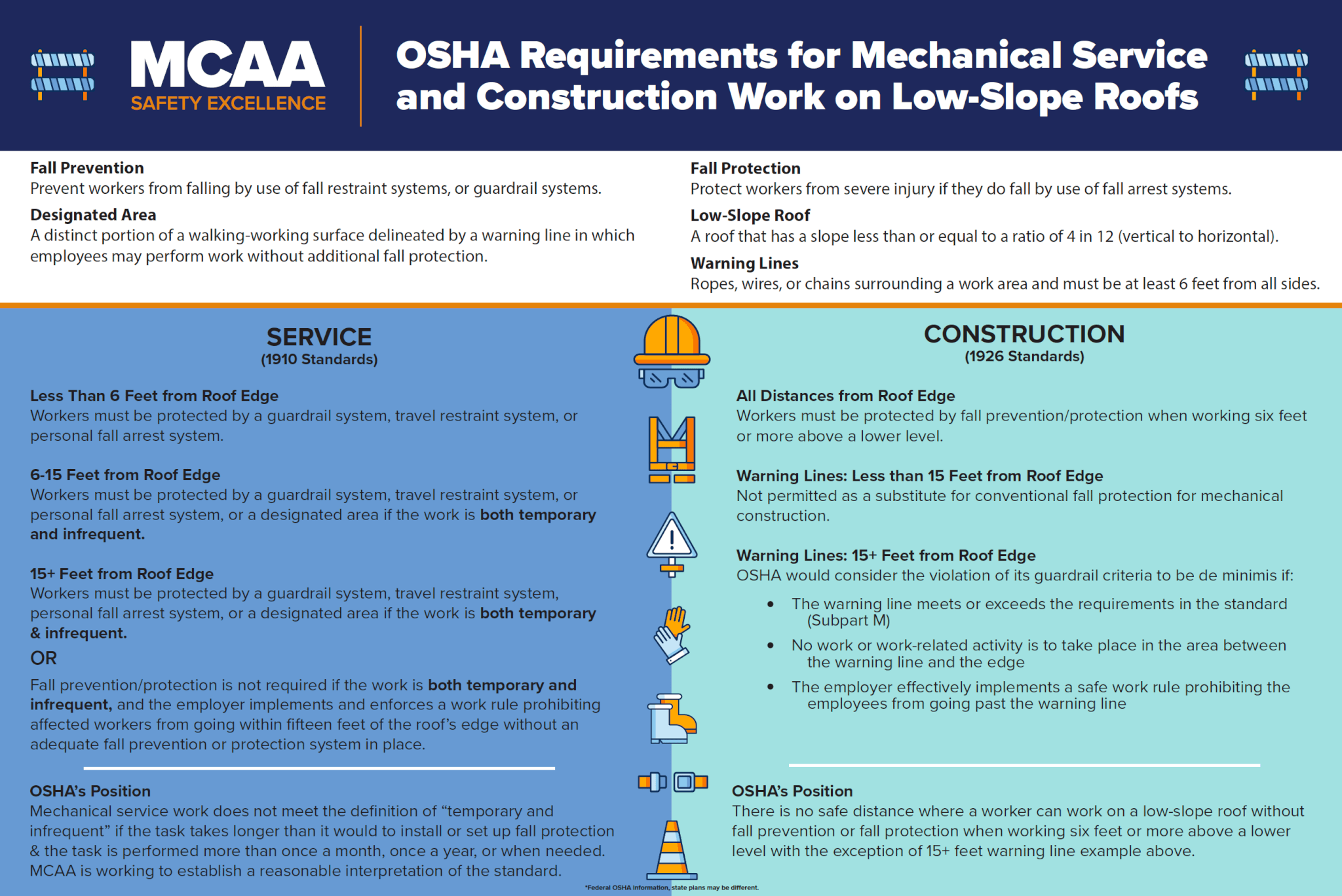
Fall Protection: OSHA requires employers to provide fall protection for any employee working on a roof that is 4 feet or more above a lower level. Approved fall protection systems include guardrails, safety nets, personal fall arrest systems, warning lines, and other methods designed to reduce the chance of a fall.
Hazard Communication: Employers must ensure workers are trained on the specific hazards associated with roof work. This covers roof access points, surface conditions, fragile roof materials, mechanical equipment, and any environmental risks that may affect the job.
Personal Protective Equipment (PPE): OSHA requires employers to provide appropriate PPE and verify that it is used correctly. Hard hats, safety glasses, non-slip footwear, and high-visibility clothing are typical examples that support safer roof operations.
Ladder Safety: Any ladder used for roof access must be inspected, secured, and appropriate for the task at hand. OSHA requires employers to maintain ladders in good condition and ensure that workers understand proper ladder use to prevent falls or structural failures.
Heat Illness Prevention: For workers performing roof tasks in hot conditions, OSHA provides guidelines that help employers protect teams from heat stress. This includes access to water, rest periods, shade, and awareness training on early signs of heat-related illness.
Together, these regulations create a safer environment for workers handling tasks at height. Employers who fail to meet OSHA’s requirements may face penalties and fines, and more importantly, place their teams at unnecessary risk.
Understanding these regulations is a key step toward maintaining compliance and building a strong safety culture across US job sites.
What Should Be Included When Thinking About Roof Safety Systems
Rooftop safety equipment is essential for workers performing maintenance, inspections, or construction work on elevated surfaces. This equipment reduces the risk of falls, which remain one of the leading causes of serious injuries in the industry.
The specific type of roof safety equipment required will depend on the structure’s height, the site’s complexity, and the nature of the task being performed. Below are key components to consider when planning roof safety systems for any job site.
Personal Protective Equipment (PPE)
PPE is a critical part of protecting workers on the rooftop. Teams should wear non-slip footwear, hard hats, and high-visibility clothing to ensure they remain visible and stable in challenging conditions. Gloves and eye protection are also essential for reducing the risk of injury from roof materials or equipment.
Fall Protection Systems
Fall protection systems include guardrails, safety nets, and personal fall arrest systems. These solutions are designed to stop or prevent falls when workers are operating near open edges, skylights, or unstable surfaces. Fall protection remains one of the most essential elements of any roof safety plan.
Warning Lines
Warning lines work alongside guardrail systems to provide visual cues that alert workers to hazardous areas. These simple markers help maintain a safe distance from roof edges and reinforce proper working boundaries at height.
Access Equipment
Safe access is a core part of any roof access plan. Equipment such as ladders, scaffolds, and designated access points must be used correctly and inspected regularly. Proper access equipment helps prevent falls during ascent and descent and supports smoother movement across the roof surface.
Weather Protection
Workers must also be protected from weather-related hazards. This may include shade structures, portable shelters, or protective coverings during rain or snow. OSHA recommends stopping work and seeking shelter when thunder is heard. Lightning can strike even without rainfall. Work should only resume 30 minutes after the last observed lightning or thunder event.
What Is the Difference Between an Active and Passive Fall Protection System
Active fall protection and passive fall protection are the two primary approaches used to prevent workers from falling while operating at height. Each system offers different levels of control, reliability, and worker involvement, which makes it essential for employers to understand how they compare.
Active fall protection requires the worker to take deliberate action to stay protected. This includes connecting to harnesses, lanyards, anchors, and other components of a personal fall arrest system. Since these systems rely on proper engagement, workers must receive ongoing training to ensure they use the equipment correctly and carry out routine inspections.
Active protection can be highly effective, but it depends on worker participation and consistent attention to detail.
Passive fall protection, on the other hand, uses fixed physical barriers that prevent falls without requiring any action from the worker. Common examples include guardrails, hatch guards, skylight guards, and self-closing gates that cover roof openings or hazardous edges.
These systems are always in place, do not require worker interaction, and provide a reliable layer of safety during all roof activities.
Passive protection is often considered the more effective option because it removes the risk of human error and provides continuous protection throughout the workday.
These systems can also be more cost-effective and may have longer lifespans than many active devices. OSHA encourages the use of passive fall protection whenever possible because it offers a consistent level of safety and supports stronger compliance across job sites.
Employers should evaluate which approach suits their site conditions, project requirements, and worker experience. Speaking with certified safety professionals can help determine the most suitable fall protection system for your company and ensure that all measures align with current OSHA roof safety standards.
Your Roof Safety Equipment Has Been Installed, Now What
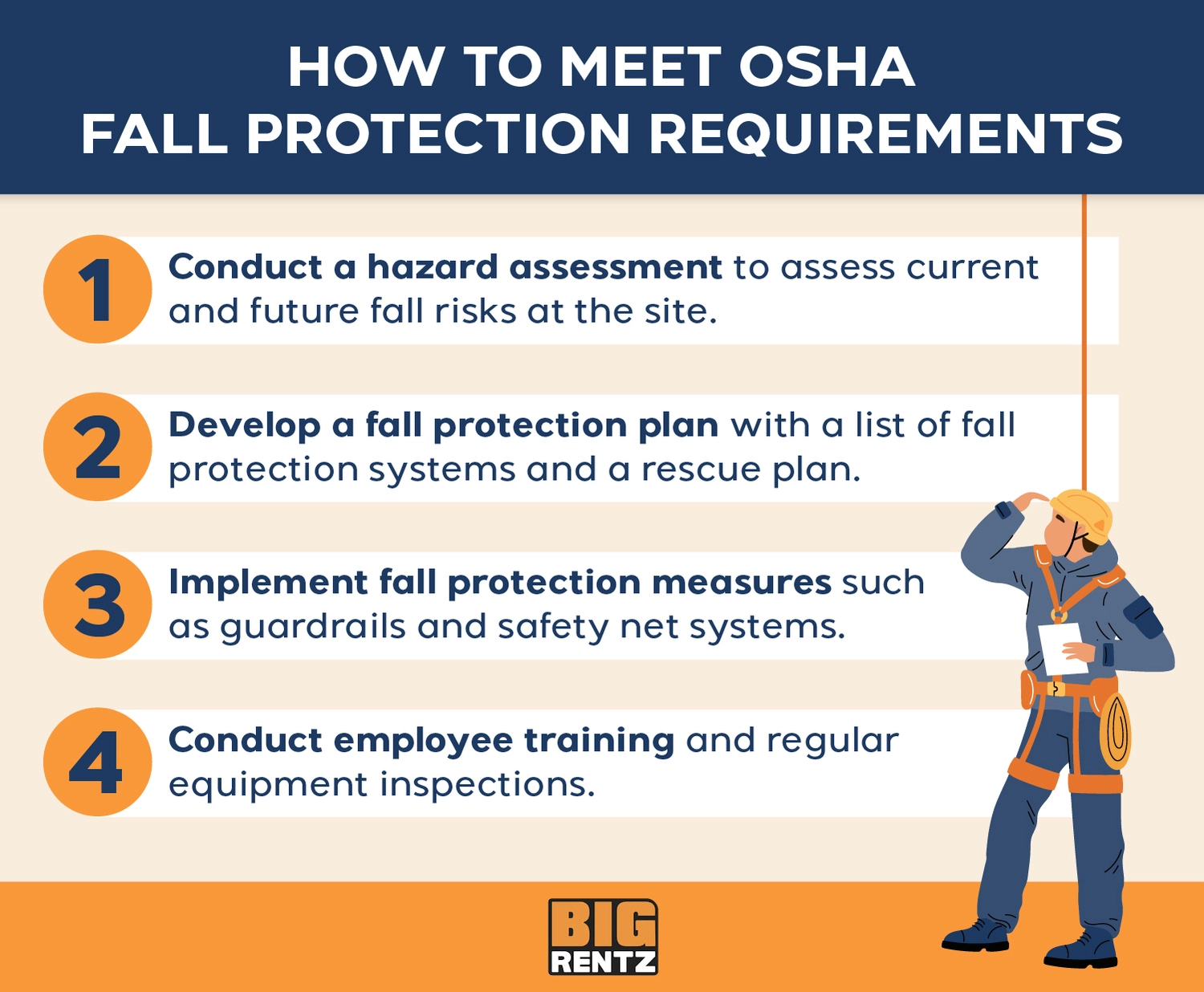
Installing roof safety equipment is only the first step in protecting workers at height. Employers must stay current with the latest roof safety regulations and ensure their workplace remains compliant over time. Ongoing attention helps create a safer environment and supports long-term adherence to OSHA roof safety standards. Below are key steps employers can take to maintain strong safety performance after installation.
Stay informed: Employers should remain aware of current and upcoming roof safety requirements, including changes to existing rules. This can be done by reviewing government updates, attending industry training sessions, and following trusted safety publications.
Staying informed allows employers to adjust practices and stay up to date on current and upcoming roof safety requirements, including any unforeseen issues that arise.
Conduct regular assessments: Routine assessments help identify new or evolving fall hazards. These assessments should include inspecting the roof surface, checking access points, reviewing fall protection equipment, and examining any materials or tools used on the job. Regular assessments support early detection of risks and ensure the site stays compliant.
Provide training: Workers need ongoing training in the proper use of PPE, fall protection systems, hazard recognition, and emergency response. Refresher sessions help maintain awareness and reinforce best practices. Consistent training ensures workers understand how to operate safely and reduces the risk of accidents.
Implement safety protocols: Employers should establish clear safety protocols that define how equipment is inspected, maintained, and used. These protocols also outline procedures for emergencies, incident reporting, and investigation. Documented processes help maintain compliance with OSHA roof safety regulations and create accountability across the workplace.
Conclusion
Employers must provide their teams with the proper roof safety equipment to protect those who work at height. OSHA has established clear, detailed roof safety regulations that make it easier for employers to understand their responsibilities and to use appropriate roof safety equipment to protect employees and maintain a safer workplace.
A responsible employer will always take every step possible to protect their workers because employees are the most valuable part of any operation.
Whether you install guardrail systems, use a personal fall arrest system, or strengthen your overall fall protection plan, choosing safety is always the right decision. A consistent commitment to training, compliance, and proper equipment helps reduce risks, supports worker confidence, and creates a safer job site for everyone involved.
Book a call with Dewick today for your Roof Safety Compliance.
Get to know more about Dewick
Dewick supports contractors, consultants, and owners by removing the burden of O&M manuals, construction closeout, and handover documentation. Our team of experienced client coordinators, engineers, and technical writers works alongside your project team to deliver accurate, compliant documentation without disrupting construction programs.