
Overcoming Common Construction
Compliance Challenges in the U.S. Market
Most projects in the United States construction industry involve a complex network of general contractors.
Construction teams rarely operate as a single, unified organisation. Most projects in the United States construction industry involve a complex network of general contractors, subcontractors, suppliers, compliance officers, back-office teams, and project owners.
Each party plays a critical role, but each also brings its own internal processes, documentation standards, and interpretation of construction compliance requirements.
This fragmented structure makes compliance management in construction especially challenging. While federal regulations such as OSHA compliance, labour laws, and safety standards apply across the board, many compliance obligations are enforced at the state and local level.
As a result, different stakeholders may track compliance using different metrics, tools, and reporting methods. What appears compliant to one party may fall short of U.S. regulatory compliance standards when reviewed holistically.
The situation becomes even more complex on large or multi-state projects. Subcontractors may operate across jurisdictions with varying state construction regulations, licensing rules, and workforce compliance requirements.
Without centralised oversight, gaps can easily emerge in areas such as safety reporting, worker classification, documentation management, and audit readiness. These gaps increase the risk of penalties, project delays, and reputational damage.
Ensuring consistent compliance in the construction industry requires more than individual checklists or isolated audits. It demands alignment across all teams involved, clear accountability, and standardised processes that scale across projects and regions.
Without this alignment, compliance efforts often become reactive rather than proactive, addressing issues only after violations occur.
In this article, we will break down the most common construction compliance challenges in the United States, explain why they persist, and share practical strategies construction teams can use to overcome them.
By understanding where compliance typically breaks down, project leaders can take a more structured, preventive approach to managing risk across their operations.
Why Compliance Is So Difficult to Achieve in the Construction Industry
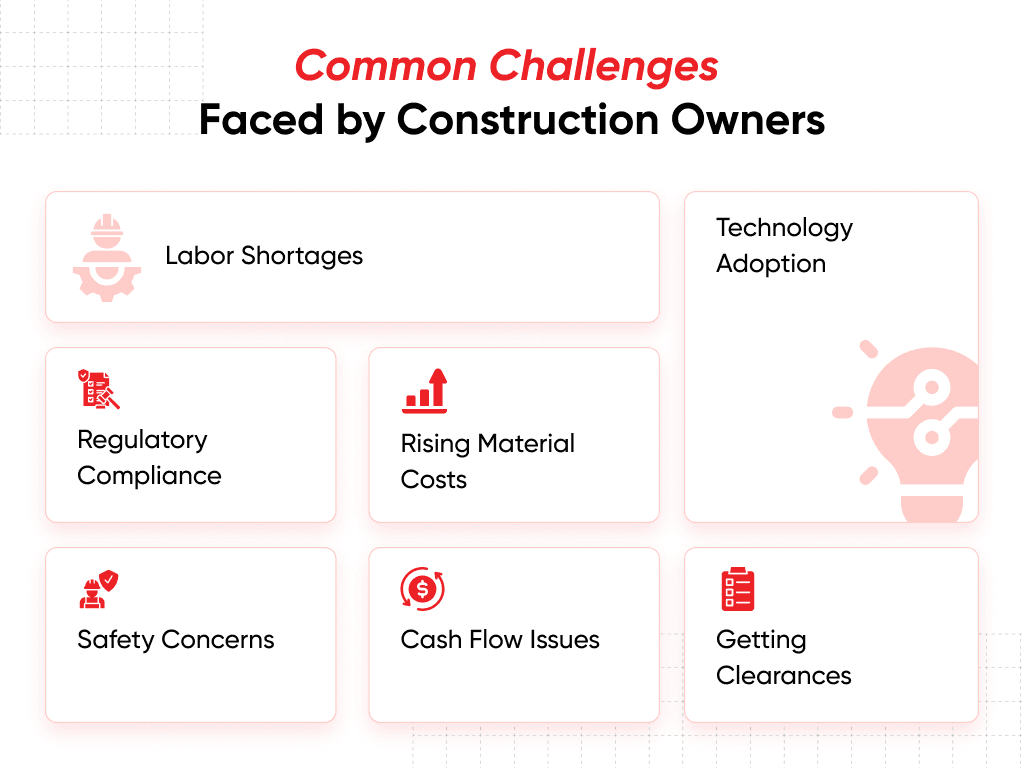
The construction industry in the United States is among the most heavily regulated sectors of the economy. Every phase of a construction project is governed by multiple layers of rules and oversight, including federal construction regulations, state and local building codes, insurance requirements, worker classification laws, union agreements, environmental standards, and strict workplace safety compliance obligations.
Beyond regulatory volume, complexity is the real challenge. Large construction projects rarely rely on a single organisation. Instead, they require coordination between general contractors, subcontractors, suppliers, inspectors, legal teams, and project owners.
Each stakeholder is responsible for meeting specific construction compliance requirements, yet they often operate with different systems, processes, and interpretations of regulatory standards. Aligning all parties under a unified compliance framework is difficult, particularly when accountability is fragmented.
This complexity increases the likelihood of compliance failures. Even well-intentioned construction firms can fall short due to inefficient compliance processes, poor communication, or outdated documentation practices.
Missing permits, incomplete safety records, improper worker classification, or expired insurance certificates can quickly escalate into regulatory violations, resulting in fines, legal disputes, project delays, or costly rework.
The financial impact of these failures is significant. The construction industry loses approximately $177 billion each year to overspending, much of which stems from compliance-related inefficiencies, errors, and corrective actions. These losses are not always the result of major violations. In many cases, they stem from small administrative breakdowns that compound over time.
One of the most persistent challenges is managing construction documentation. Projects generate enormous volumes of paperwork, including contracts, safety reports, inspection records, compliance certificates, and change orders. When these documents are scattered across systems or managed manually, teams waste valuable time searching for information rather than advancing the project.
This issue is reinforced by findings from the Construction Disconnected report. According to the survey, construction professionals spend only 65% of their time on direct project work, while 35% is spent on non-project-related tasks. These include tracking down missing documents, correcting errors, and resolving issues that require rework. This inefficiency not only affects productivity but also increases exposure to construction compliance risks.
In an industry where margins are tight and deadlines are critical, the inability to manage compliance efficiently creates both operational and financial strain. Without better systems, standardised processes, and clearer ownership, achieving consistent construction regulatory compliance in the United States remains an ongoing challenge.
The Barriers to Compliance in the Construction Industry
Regulatory requirements are unavoidable in the United States construction industry. Construction companies must comply with a complex mix of federal construction regulations, state-specific building codes, local permitting rules, labour laws, insurance requirements, and safety mandates. For firms operating across multiple states, this complexity increases even further, as compliance standards can vary significantly by jurisdiction.
Even highly organised construction companies struggle to stay aligned with all required construction compliance regulations. Audits, inspections, and documentation reviews often expose gaps that were not visible during day-to-day operations. While the regulatory burden can feel overwhelming, many of these challenges stem from operational barriers rather than the regulations themselves. With the right systems and processes, these barriers can be reduced.
Challenge #1: Paperwork Overload and Documentation Gaps
Construction document management is a critical part of compliance, yet it remains one of the most difficult areas to control. Every construction project generates a massive volume of documents, including permits, contracts, safety reports, inspection logs, change orders, and audit records. Managing this paperwork manually or across disconnected systems increases the risk of errors.
A single mistake in a compliance document can have serious consequences during execution. Poor documentation practices are a major driver of rework, especially when teams lack proper version control. In the U.S. construction sector, millions of dollars are lost each year due to rework caused by outdated or incorrect documentation.
Documentation inefficiencies also create operational strain. Construction staff frequently waste valuable labour hours searching for the correct files, tracking down change orders, or responding to information requests. When access to documents is restricted or unclear, communication slows, and project timelines suffer.
The problem becomes even more pronounced with change orders. A typical construction project can generate more than 50 change orders from design through completion, and manual processes struggle to keep pace with these changes.
These challenges directly impact construction compliance management. Physical paperwork can be lost or damaged, and digital files stored across multiple systems are difficult to retrieve quickly.
When an inspection or audit occurs, there is little room to fix documentation issues at the last minute. As a result, compliance risks increase precisely when scrutiny is highest.
Modern construction management technology is increasingly focused on automation, centralised data management, and process efficiency. These tools help reduce compliance risk by ensuring documents are accurate, current, and accessible when needed.
Challenge #2: Outdated Technology and Siloed Systems
Many construction companies continue to rely on free or low-cost storage tools, spreadsheets, and general-purpose software that were not designed for construction compliance tracking. While these tools may appear cost-effective, they often create siloed information and fragmented workflows.
When teams are forced to move between dozens of applications to manage documents, errors become more likely. Files may be duplicated, overwritten, or stored in the wrong location. Version control issues are common, and audit trails are often incomplete. These gaps can lead to serious challenges in construction auditing, especially when regulators require clear documentation histories.
Outdated technology also limits visibility. Without real-time oversight, compliance issues are often identified too late, after violations have already occurred.
In contrast, centralised construction compliance software allows teams to manage documentation, track regulatory updates, and monitor compliance status in one place. Many modern platforms offer automated alerts and real-time monitoring, helping construction firms stay aligned with evolving U.S. construction regulations.
Challenge #3: Safety Regulations and Ongoing Monitoring
Among all compliance obligations, construction safety regulations require the most consistent attention. Standards enforced by agencies such as OSHA demand ongoing documentation, training records, inspection reports, and incident logs. These requirements generate daily administrative work that is easy to overlook during busy project phases.
Employee training certifications, safety data sheets, equipment inspections, and site audits must all be documented accurately and kept up to date.
When these records are managed manually or stored inconsistently, gaps can quickly emerge. Missed training updates or incomplete inspection logs can result in violations, fines, or work stoppages.
Many construction firms are turning to environmental, health, and safety compliance software to address these challenges. These tools centralise safety documentation, streamline reporting, and improve visibility across job sites.
By reducing administrative burden and improving accuracy, technology plays a critical role in strengthening workplace safety compliance across construction operations.
Leveraging Artificial Intelligence to Address Construction Compliance Challenges
Modern construction software is increasingly important for helping companies manage construction compliance in the United States. As regulatory requirements grow more complex, digital tools powered by artificial intelligence in construction enable teams to reduce manual work, improve accuracy, and respond more quickly to compliance risks.
AI-powered platforms are particularly effective because they connect field operations with centralised systems in real time. This connection ensures that compliance data is captured consistently across job sites, reducing gaps between what happens in the field and what is reported during inspections or audits.
Below are several ways AI-driven construction management software supports compliance and operational efficiency.
On-Site Reporting and Real-Time Visibility
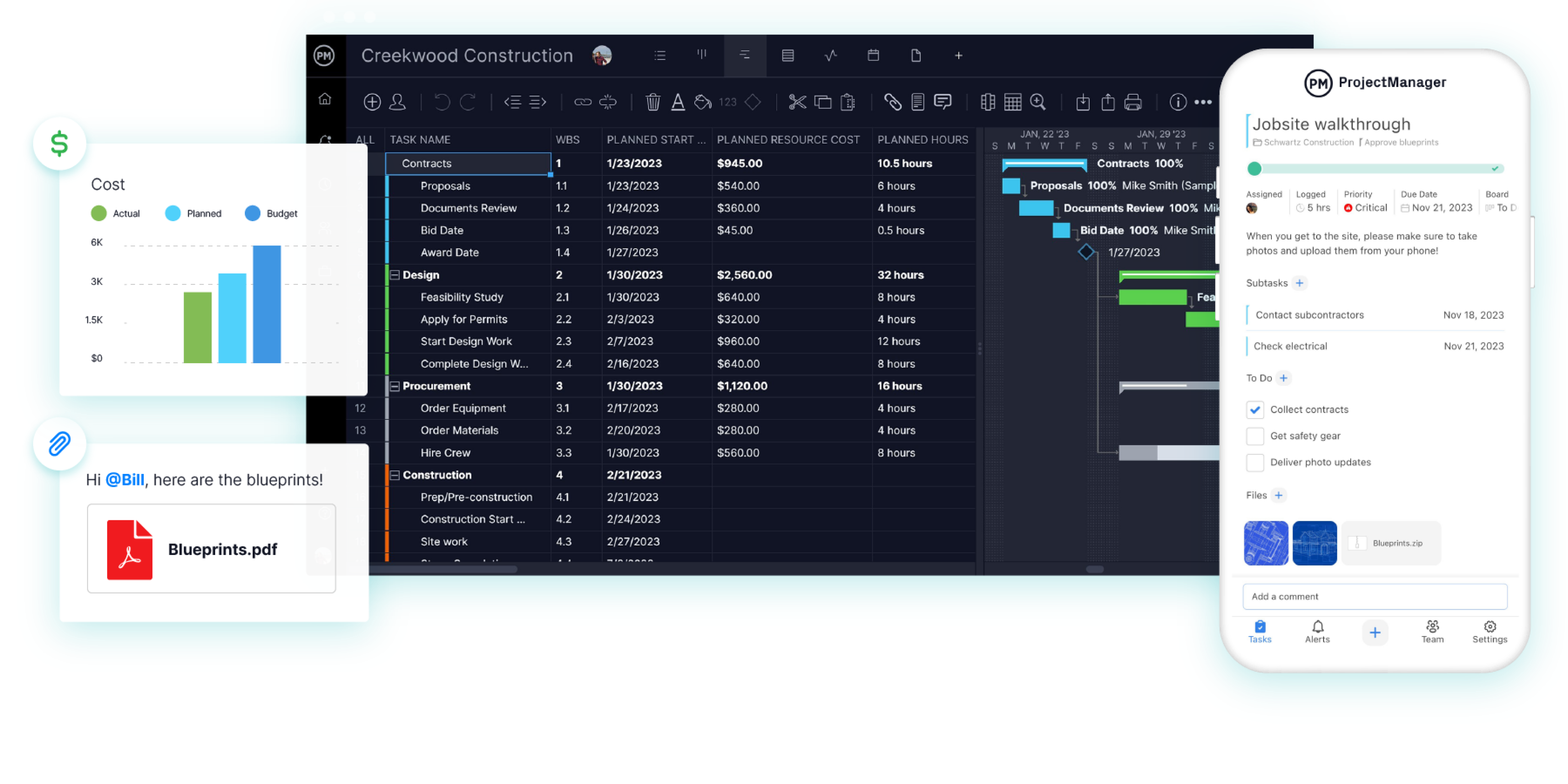
Leading construction compliance software integrates directly with mobile devices used on job sites. Field workers can complete inspections, incident reports, and safety checklists directly from their smartphones or tablets. These reports are automatically synced to a centralised system without manual data entry.
This real-time synchronisation provides managers with immediate visibility into job-site conditions. When issues arise, teams can respond quickly, reducing the risk of compliance violations, safety incidents, or project delays. For companies operating across multiple sites or states, this visibility is essential to maintaining consistent compliance with construction regulations.
On-site digital reporting also reduces administrative overhead. Eliminating paper-based workflows lowers costs and improves data accuracy.
When field reports appear instantly on a central dashboard, managers can better coordinate labour, procurement, and equipment use. AI-supported analytics also help identify patterns that inform preventative maintenance schedules and risk mitigation strategies.
Paperless Operations and Automated Documentation
Manual paperwork remains a common source of compliance failures. Illegible forms, missing fields, or incomplete submissions can result in costly fines or failed audits. Paperless construction operations reduce these risks by ensuring that compliance forms, checklists, and reports are completed correctly before submission.
Most modern construction platforms enforce mandatory fields, standardised templates, and automated validation. This ensures that critical compliance data is not overlooked. Mobile devices also support RFID, barcode scanning, and image capture, providing a level of data accuracy that manual processes cannot match.
By enabling inspections and documentation updates directly from the job site, construction compliance technology streamlines workflows and improves audit readiness. Digital records are stored securely, time-stamped, and easily retrievable, which is essential during U.S. construction audits and inspections.
Asset Tracking and Equipment Compliance
Effective asset tracking in construction is another area where software and AI add measurable value. Construction companies must track materials, deliveries, equipment usage, and maintenance schedules to remain compliant and avoid operational disruptions.
AI-enabled construction platforms help managers coordinate supply deliveries, account for delays, and optimise inventory management.
Equipment maintenance schedules can be automated based on usage data, reducing the risk of equipment-related safety issues or downtime. These systems also create clear documentation trails, supporting compliance with equipment safety regulations and maintenance standards.
By improving visibility across assets and logistics, construction management software reduces waste, minimises delays, and strengthens compliance across the entire project lifecycle.
Frequently Asked Questions About Construction Compliance
What is construction compliance in the United States?
Construction compliance in the United States refers to adhering to all federal, state, and local regulations that govern construction activities. These include building codes, labour laws, insurance requirements, environmental standards, and workplace safety regulations such as OSHA. Compliance ensures projects meet legal requirements, avoid penalties, and protect workers and stakeholders.
Why is construction compliance so difficult to manage?
Compliance is challenging because construction projects involve multiple stakeholders with distinct responsibilities and processes. Construction regulatory compliance also varies by state and municipality, making it difficult for companies operating across regions to maintain consistency. Manual documentation, siloed systems, and frequent regulatory changes further increase complexity.
What are the most common construction compliance risks?
Common construction compliance risks include incomplete documentation, expired permits or licenses, gaps in safety training, improper worker classification, and poor version control of project records. These issues often surface during inspections or audits, leading to fines, delays, or rework.
How does construction software help with compliance?
Construction compliance software centralises documentation, automates reporting, and provides real-time visibility into job site activities. By reducing manual processes and improving data accuracy, software helps teams stay audit-ready and respond quickly to compliance issues.
What role does artificial intelligence play in construction compliance?
Artificial intelligence in construction helps identify compliance risks earlier by analysing patterns in safety reports, inspections, and operational data. AI-supported tools can flag missing documentation, highlight recurring safety issues, and support preventative maintenance planning, reducing the likelihood of violations.
How does paperless documentation improve construction compliance?
Paperless construction documentation reduces errors caused by illegible forms, missing information, or misplaced records. Digital systems enforce standardised templates and mandatory fields, ensuring compliance requirements are met before submission and improving audit and inspection readiness.
Is construction compliance different across U.S. states?
Yes. While federal regulations provide a baseline, state construction regulations and local building codes vary significantly. Companies operating in multiple states must account for these differences and maintain clear oversight to ensure consistent compliance across all projects.
What happens if a construction company fails to meet compliance requirements?
Failure to meet construction compliance requirements can result in fines, legal disputes, project delays, work stoppages, or reputational damage. In severe cases, repeated violations may result in the loss of licenses or exclusion from future projects.
Final Thoughts
Managing construction compliance in the United States has become increasingly complex as regulations continue to evolve at the federal, state, and local levels. Without the right systems in place, even well-run construction companies can struggle with documentation gaps, delayed reporting, and compliance risks that surface during inspections or audits.
By tracking construction compliance requirements and centralising documentation, modern construction software helps eliminate many of the paperwork-related issues and human errors that lead to poor compliance outcomes. Automated workflows reduce reliance on manual processes, while paperless construction operations ensure that reports, permits, inspections, and change orders are completed accurately and stored securely.
Beyond documentation, construction software streamlines daily operations by automating repetitive administrative tasks and improving visibility across job sites. This allows project managers and compliance teams to focus on risk prevention rather than damage control. Keeping documentation and reports aligned with state and federal construction regulations is essential not only for audit readiness but also for maintaining project timelines, controlling costs, and protecting the business’s reputation.
This is where Dewick plays a critical role. Dewick helps construction companies strengthen their compliance management processes by improving visibility, accuracy, and operational control. By reducing manual effort and improving regulatory alignment, Dewick enables teams to manage compliance with greater confidence across every stage of the project lifecycle.
If your organisation is looking to reduce compliance risk, improve documentation accuracy, and simplify regulatory oversight, now is the time to act.
Schedule a call with Dewick to see how a more structured, technology-driven approach can support long-term compliance and operational success in the construction industry.
Get to know more about Dewick
Dewick supports contractors, consultants, and owners by removing the burden of O&M manuals, construction closeout, and handover documentation. Our team of experienced client coordinators, engineers, and technical writers works alongside your project team to deliver accurate, compliant documentation without disrupting construction programs.